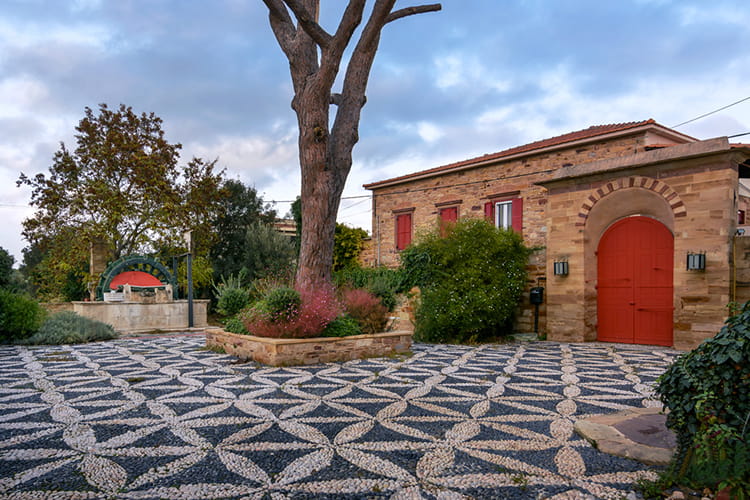
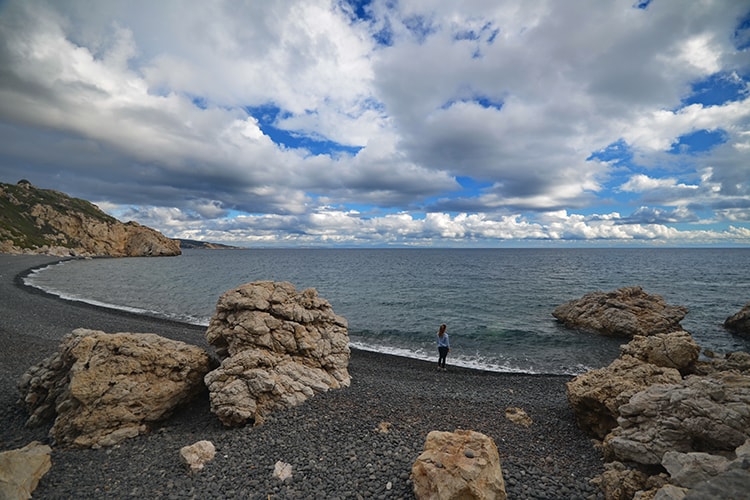
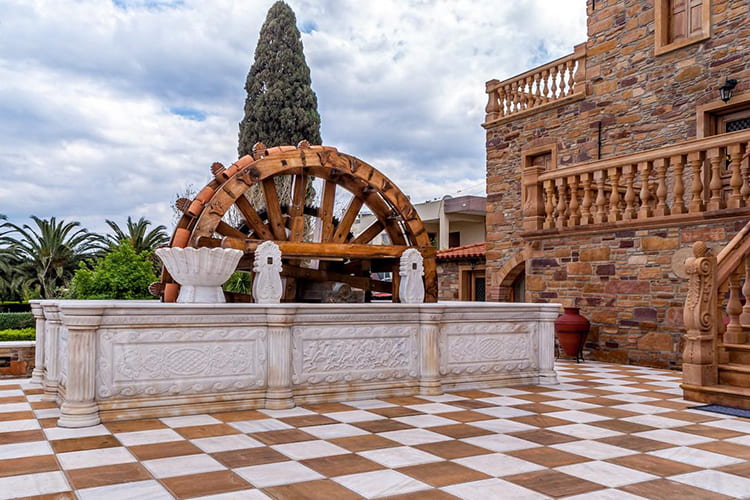
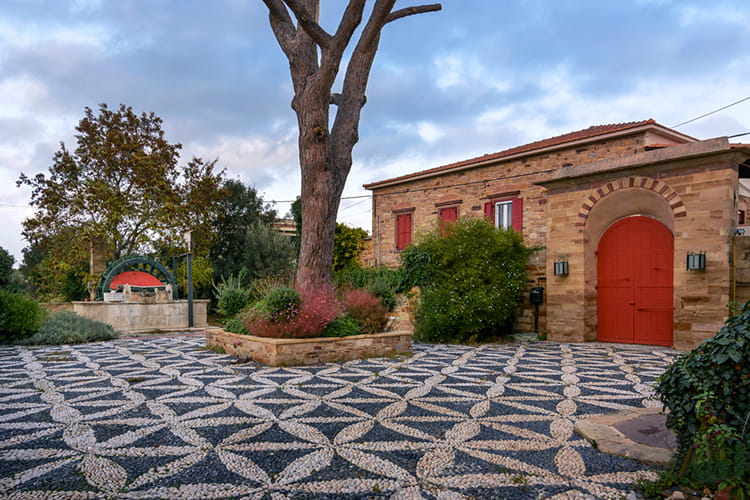
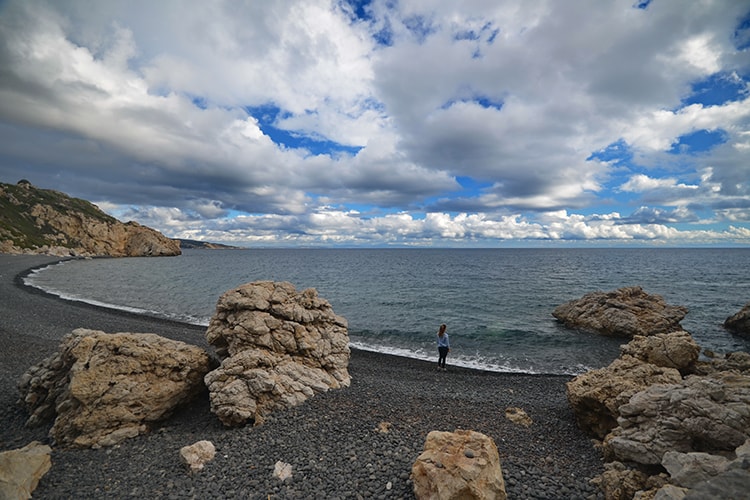
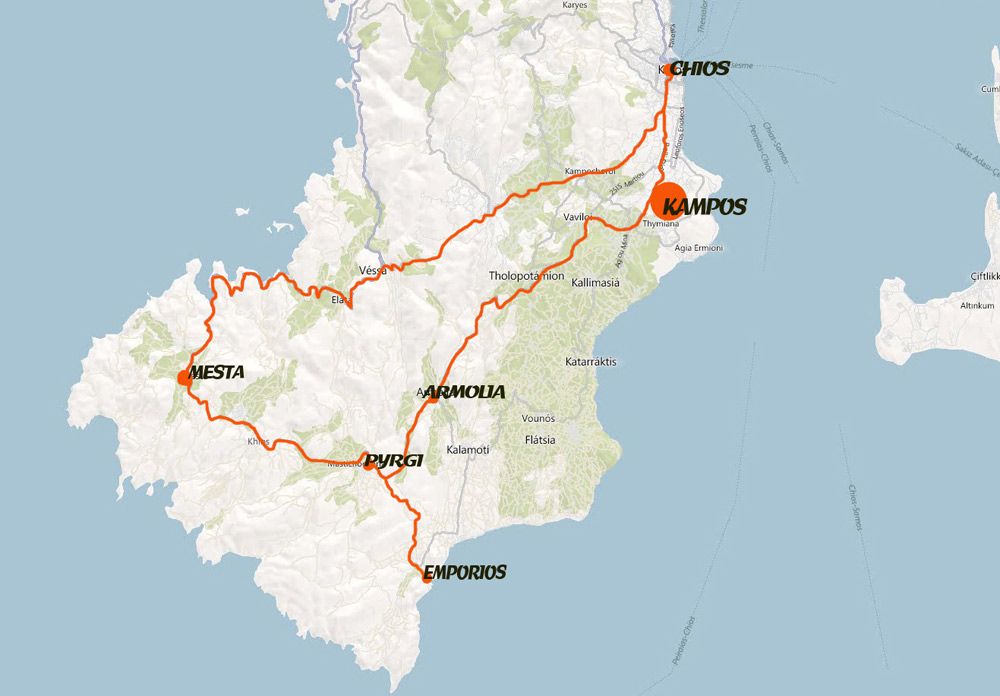
The first village we encounter going south from Kambos is Armolia, famous for its traditional beautiful pottery. The Armolousians people have a long tradition in making and decorating ceramics such as: pitchers, vases, jars, bowls and cups so there is a marvelous collection of local ceramics, and you can still see the simple potter’s wheel turning. Four kilometers from Armolia we get to the small bay of Emborio, where some remains of a very ancient village were found. The beach there is also called "Mavra Volia" (black pebbles), since the lava of the volcano next to it, covered the beach many years ago. These black pebbles, together with other white ones, are usually used to make mosaics on the floors, and good examples of it are the ones at the Library of Chios and at the Cathedral.
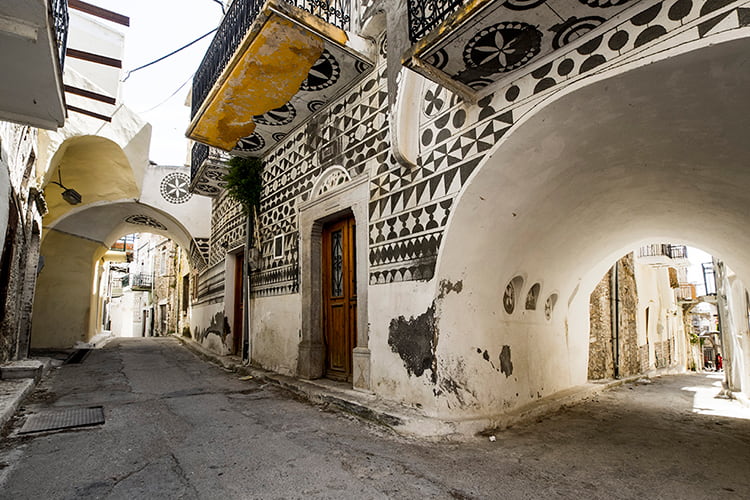
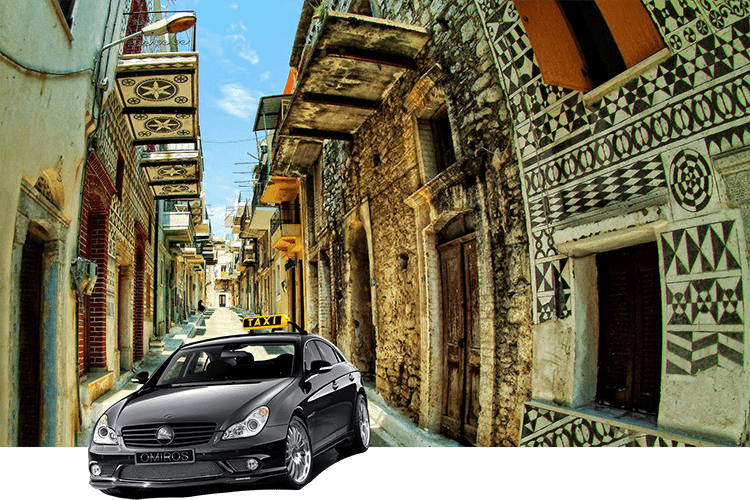
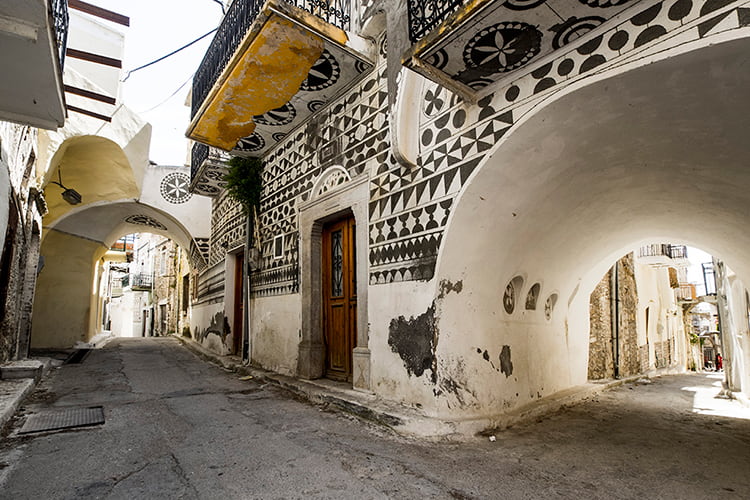
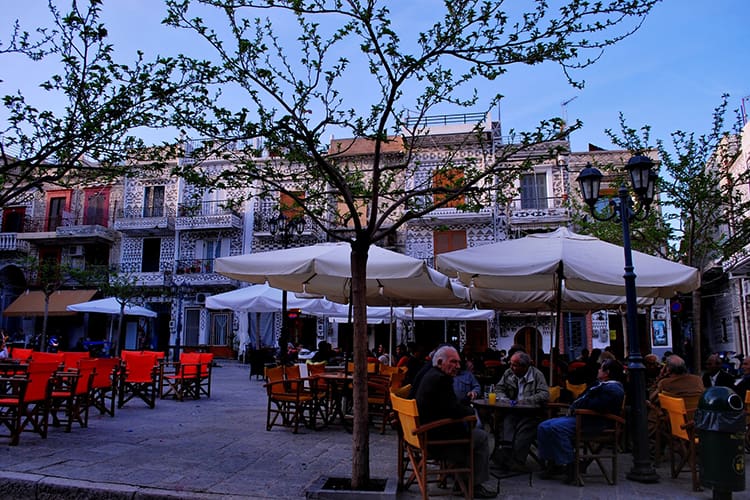
At Pyrgi, one sees scraped designs called Xysta on the facades of the houses. This is a technique of hand-engraving geometric motifs in black and white on plaster. It is based on plastering-sand being applied to the wall, carefully painted white, then scraped with the designs. These Xysta, reminiscent of the Italian Sgraffito, a form of decoration which stems from Genoa, has made the Pyrgi unique.
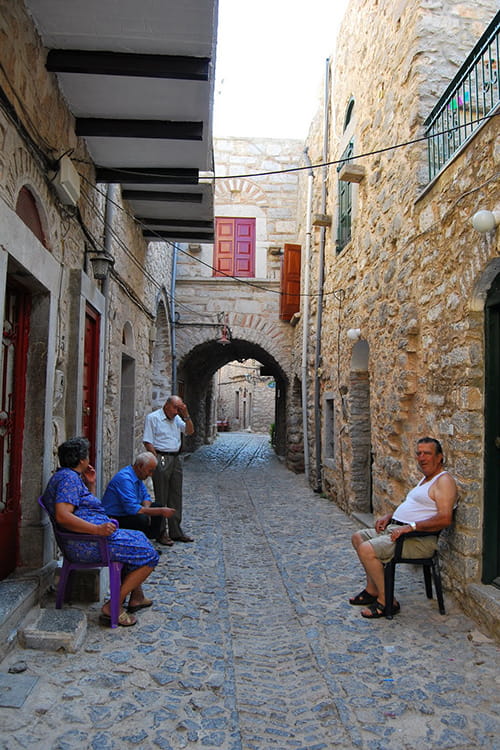
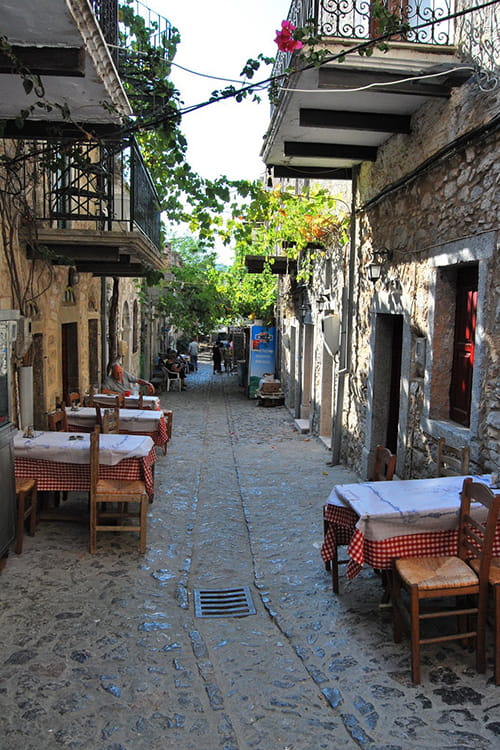
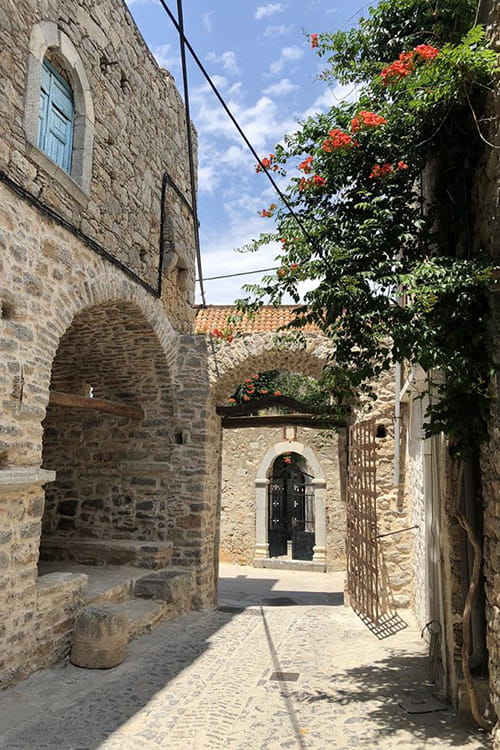
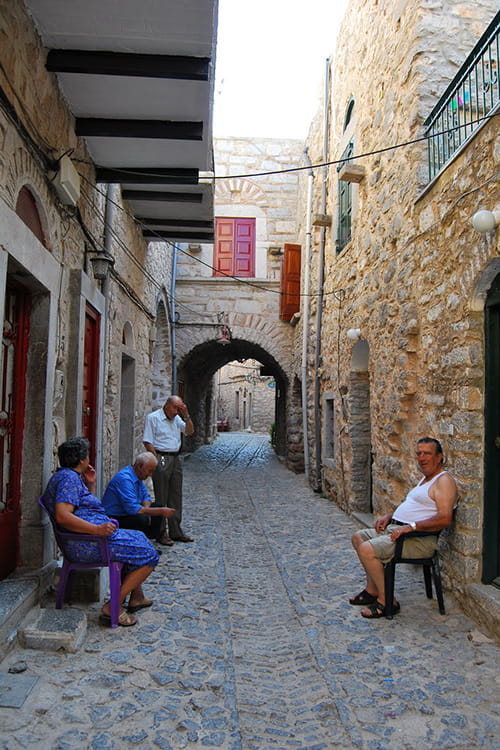
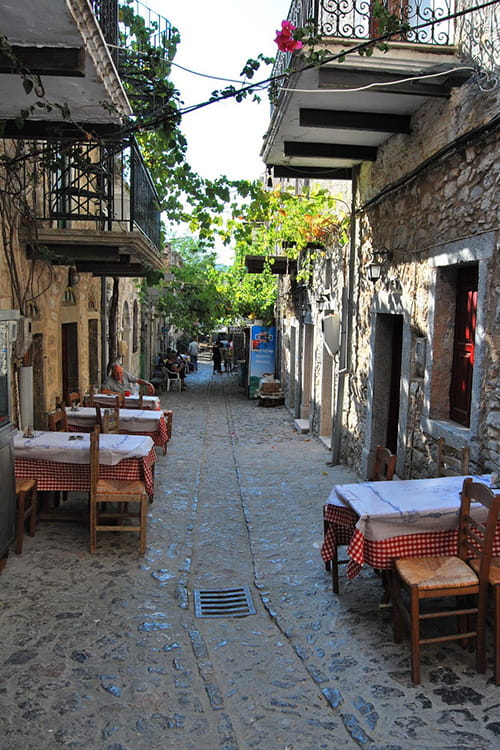
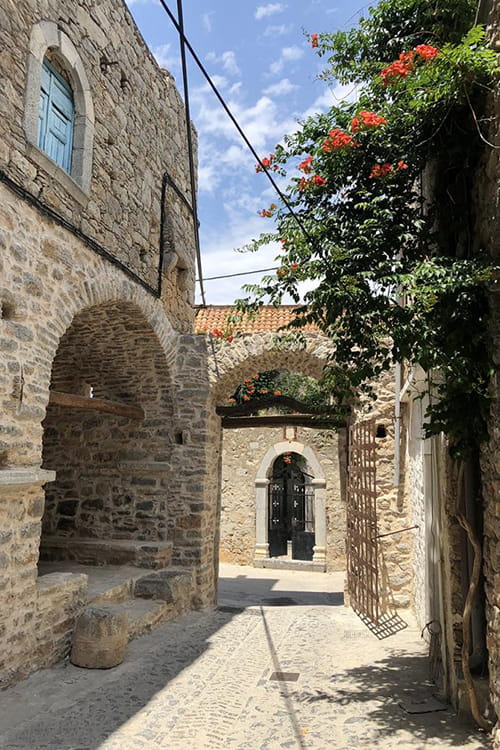
At the center of Pyrgi rises the defence tower, where the inhabitants took refuge in the case of attack, using a movable bridge. The streets are narrow, stone-paved, and are connected to the central tower square. At frequent intervals there are transverse archways supporting the structures, as well as vaults and arches supporting the rooms. The functional character of the houses was geared to defence, and thus the inhabitants were able to move about the roofs without being seen. The four-sided shape of these houses, their thick structure, the defence system, the small areas for general use, and their relation to the treeless, natural surroundings, convince us that Pyrgi was built on a fixed plan which may have been imposed by the Genoese.
Mavra Volia is unique scenery you could not compare it with any beach of the world. Its beauty is the black pebbles, a result of a volcano eruption (the inactive Psaronas) hundreds of years ago. It is the only beach with black pebbles on the island. Go there to enjoy the magic of the volcanic scenery and the taste of fresh fish at the nearby taverns at the picturesque Emporios village.
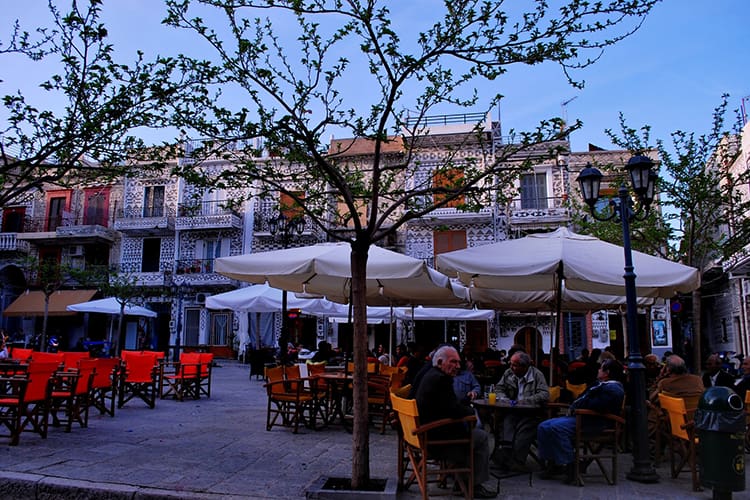
Returning to the main road, the next village is Pyrgi, the "painted" village. This is one of the most important medieval villages of Chios because of its traditions and its architecture. The village has long history, interesting folklore stories and great architectural interest. It preserves in good condition its medieval form which dominated all south villages. Located in the heart of the largest plain of the island , it consists of houses built next to each other and narrow streets. The houses form the outer wall of the village and the roofs are flat. The village was built in the 14th-15th century to protect the inhabitants from the pirates who wanted to grab the valuable mastiha. What makes the village special is the "xysta". Mainly decorative geometric patterns, carved and sharpened on the surfaces of the walls adorn every single construction of the village making Pyrgi a special destination.